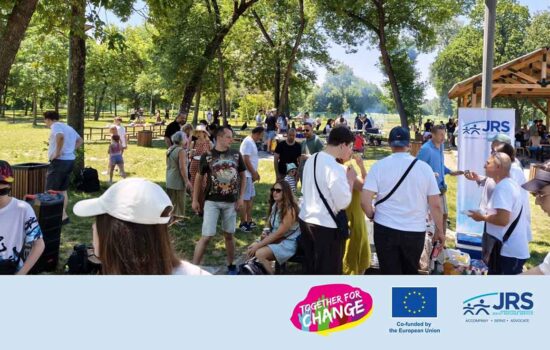
Jesuit Refugee Service (JRS) is an international Catholic organization with a mission to accompany, serve and advocate for the rights of refugees and others who are forcibly displaced. JRS is now working in over 50 countries worldwide where there are over 20 million refugees and a further 25 million internally displaced within their own countries.
JRS Serbia is member of the JRS Europe network who served 198.000 people in need in 2024, in various humanitarian projects implemented on 241 locations in 23 European countries.
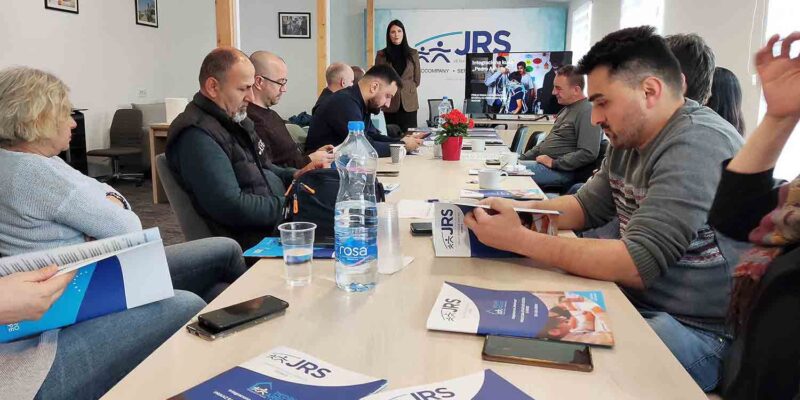
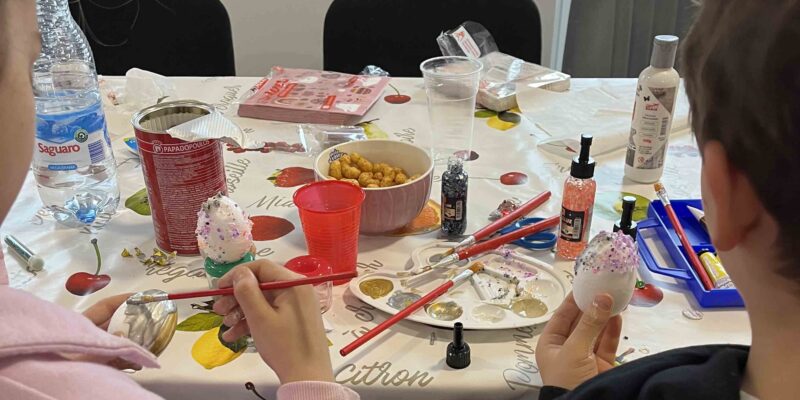
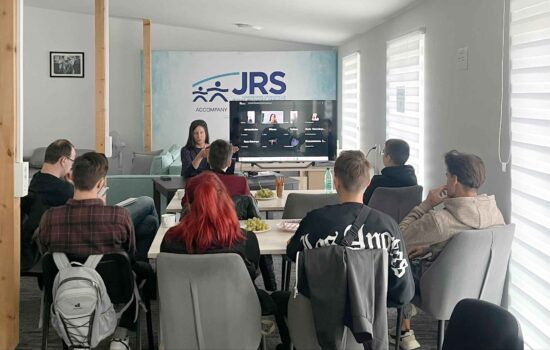
JRS Serbia was registered and launched its first project in 2017. In 2024 we supported 634 adults and children in need. Over two thirds of beneficiaries were female and vulnerable categories of children and youth from refugees from Ukraine and from Middle East, Africa and Asia as well. Our newly established Community Center for Refugee Integration (CCRI) in Belgrade, initiated in November 2024, reflects our commitment to nurturing an environment where refugees can access integration support and essential services, such as language classes, training, workshops and professional and cultural orientation programs. The integration of refugees is essential for building a cohesive and inclusive society. When refugees are given the opportunity to participate fully in society (through access to education, employment and healthcare) they contribute economically, socially and culturally to their new environment.
The integration of asylum seekers and refugees still relies heavily and almost exclusively on civil society organizations and foreign donors. Domestic funding is virtually nonexistent and it is not possible to secure even minimal resources for projects that require local financial contribution. Refugee integration is also lacking at the city level. The competent city secretariat in Belgrade has yet to recognize the need to provide systematic support to its new residents through language learning, vocational training and other integration measures.
Refugees and beneficiaries of temporary protection are our new neighbors. They have chosen Serbia as a safe place for themselves and their families. With minimal but well-planned support, we can significantly contribute to their full economic and social integration.
One of the key challenges is the limited access to healthcare for refugees from Ukraine. Currently, only those who are employed, meaning those who pay social contributions, can easily access medical services. Meanwhile, access to healthcare is significantly hindered by individuals who are unable to work due to age, illness, family obligations, or lack of language skills. At the moment, medical care is effectively reduced to emergency services, as local health centers are not informed about the procedures for admitting and registering such patients. In addition, specialist examinations also need to be included in the scope of care due to the increased number of elderly, chronically ill and mothers with children.
Thank you for helping us improve the refugee support system.