The absence of integration policies and strategies results in the stigmatization and ghettoization of foreigners, and we must resist such passivity. Inaction creates circumstances that foster racism and xenophobia among the local population, while leading to frustration and radicalization among migrants.
On Sunday, September 29, 2024, the Catholic Church will commemorate the 110th World Day of Migrants and Refugees. In an appropriate message titled “God Walks with His People,” Pope Francis invites us to see in the migrants of our time the image of the Israeli people in Moses’ time, who also fled oppression and exploitation, insecurity, discrimination, and a lack of prospects for development.
Moreover, the Pope explains that God is not only with His people but also among His people; He identifies with migrants, especially the last, the poor, and the excluded. This is a message that encourages and inspires, particularly at a time when fear of migrants is intensifying in Europe, as more countries close their borders while rarely reflecting on the situations from which migrants flee, and the discourse of solidarity and hospitality is unpopular.
This day, however, encourages us to approach the burdensome reality of contemporary migration from a Christian perspective in which we are all brothers and sisters of equal dignity. The events and conditions prompting forced migrations are numerous, and the world is not adequately able to stop or rectify them. We are witnessing numerous wars and conflicts, religious and political persecution, climate change, social injustice, and extreme poverty.
At the Jesuit Refugee Service, an organization that has been operating for over 40 years in 58 countries, accompanying, serving, and advocating for the needs of forcibly displaced people, we clearly see that the greatest contribution we can make in such a global situation is the development of a culture of solidarity, responsibility, and active advocacy for those in need. The world has sufficient resources to help all those forced to migrate; however, we must not close our eyes or turn our heads but, “within our means, welcome strangers seeking safety and the means to live that they cannot find in their homeland” (Catechism of the Catholic Church, 2241).
For a whole decade, Europe has seen an increased number of asylum seekers. Our geographical position means that tens of thousands of people pass through our regions in search of a better future in the West. Alongside them, there is also an increased number of foreign workers, who are coming more frequently from distant countries marked by different cultures and customs. These phenomena evoke fear and anxiety among many of our fellow citizens, which, just as in other countries, can easily be exploited for cheap political gain (cf. Fratelli tutti, 39).
Although every nation is obliged to protect its independence and uniqueness, we must not forget that the Earth belongs to all humanity, and that no one should have to live with less dignity simply because they were born in a place that lacks natural resources or is less developed (cf. Evangelii Gaudium, 190).
Fortunately, strong voices advocating for a closed and self-sufficient nation are not currently prominent in our public discourse. Indeed, a society that would protect itself from migrants with material or invisible walls and wires would only impoverish itself morally and spiritually (cf. Fratelli tutti, 27). Nonetheless, we are concerned about the lack of initiatives aimed at integrating migrants and sensitizing society to the phenomenon of contemporary migration. It seems that as a society we have not yet succeeded in what Pope Benedict strongly warned us about: that “we must not consider foreign workers as disposable commodities or mere labor” (Caritas in veritate, 62).
The absence of integration policies and strategies results in the stigmatization and ghettoization of foreigners, and we must resist such passivity. Inaction creates circumstances that foster racism and xenophobia among the local population, while leading to frustration and radicalization among migrants.
On the other hand, we must invest in religious literacy to make it clear that neither exclusivity nor terrorism is conditioned by religion; rather, it is instrumentally used for purposes completely contrary to its principles (cf. Document on Human Fraternity for World Peace and Living Together). The new circumstances we find ourselves in as a society necessitate the contributions of migrants and a society capable of providing protection to those in need, requiring adequate training and focus on new challenges. Through our public awareness projects and encouragement of volunteering, we strive to do this in our organization.
The fundamental Christian attitude is one of openness to others. We are called to recognize and respect not only personal needs but also to be sensitive to the needs of all people of our time, especially the poor and those who suffer (cf. Gaudium et spes, 1).
Migrants passing through our regions should remind us of how great a gift prosperity is that we enjoy, but also how it gives us the responsibility to help others who are less fortunate. The solidarity we have shown as a country towards Ukrainian refugees demonstrates that we have both the will and the material capacity for this. Therefore, a state-level strategy for solidarity with forcibly displaced persons should be developed, determining how many people and in what ways we can help them find shelter in our country under both regular and emergency circumstances.
For refugee integration to be effective, it is necessary for all social actors at the local level, especially church communities, to encourage solidarity and community, and to be ready to help with integration and build a culture of welcome (cf. Pope Francis, address at the noon prayer on World Day of Migrants and Refugees 2023). Indeed, it is through our relationship with migrants and refugees that we affirm our fundamental belief in the inalienable dignity of every human being, regardless of origin, race, or religion (cf. Declaration Dignitas infinita, 40).
Christians are especially called to develop a culture of encounter and solidarity, following the example of Christ, who prioritized those rejected by society. We must resist the temptation of fear and populism and demand the implementation of policies that respect the dignity and rights of migrants and refugees. It must not be acceptable for violence to be inflicted upon asylum seekers at borders, nor for the fate of individuals to be left to smugglers who profit from the misery of these unfortunate individuals. Therefore, we must promote safe and legal pathways for those seeking refuge, such as humanitarian visas, work permits, family reunification, student support, and sponsored arrivals (cf. Pope’s message for World Day of Migrants and Refugees 2018). Church organizations in many countries are involved in such projects and provide assistance and support to refugees during the initial period of integration through parish communities.
The phenomenon of migration today is so vast that no country can face it alone. However, this very circumstance underscores the necessity of solidarity and the need for shared responsibility to protect and assist these people. We are all in the same boat and cannot ignore those beside us (Pope Francis during his visit to the refugee camp in Lesbos 2021). We must work towards creating a society in which every person, regardless of their origin, can find safety, hope, and an opportunity for a better future. Migrants and refugees are not just victims; they are also bearers of change, bringing diverse cultures, skills, and talents that can enrich our environment (cf. Pope’s message for World Day of Migrants and Refugees 2022).
Therefore, in the spirit of community and solidarity, we call on everyone to build bridges of understanding and compassion so that the troubles of the forcibly displaced may encounter our empathy and concrete engagement.
May this World Day of Migrants and Refugees remind us to strive together for a world where everyone can live with dignity and hope, thus believing that “God walks with His people.”
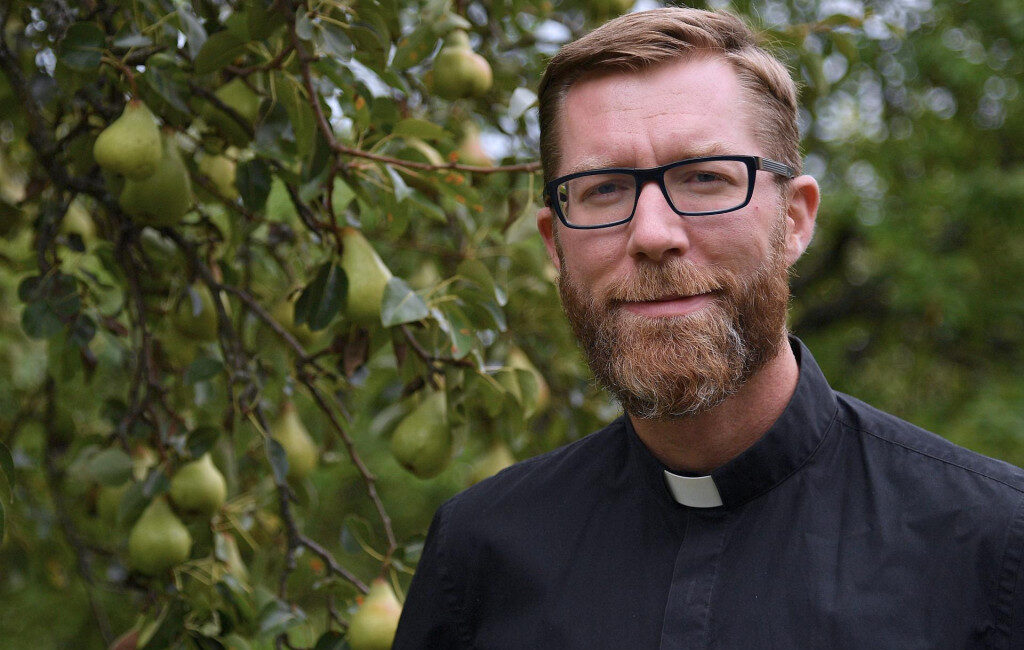
Fr. Stanko Perica, Regional Director JRS SEE